
Clinical Waste Disposal North West.
Clinical waste is unlike any other type of commercial waste. It carries genuine infection risk, has strict legal requirements at every stage of its journey from your premises to final disposal, and is inspected as a matter of course by both the Care Quality Commission and the Environment Agency. Getting it right isn't optional — it's a legal obligation that every business producing it carries from the moment the waste is created.
BWSL arranges licensed clinical waste disposal for businesses across the entire North West — GP surgeries, dental practices, care homes, pharmacies, veterinary practices, tattoo and beauty studios, private clinics and more. Free yellow bags and containers, CQC and HTM 07-01 compliant collections, full consignment notes on every lift and savings of 15–25% on what most businesses are currently paying.
30 day rolling notice. No long-term contracts. One simple monthly invoice.
Need an Instant Quote?
The Legal Framework Around Clinical Waste — What Every North West Business Needs to Understand.

The Environmental Protection Act 1990
This is the foundation of all UK waste legislation. It establishes the duty of care — the legal obligation every waste producer carries for their waste from creation to final disposal. For clinical waste this means you are legally responsible for ensuring it is correctly classified, correctly packaged, stored safely, collected only by a licensed carrier and disposed of at a permitted facility.
Critically, the duty of care cannot be transferred. Arranging for a licensed company to collect your waste doesn't end your responsibility — it simply delegates the physical activity. If your clinical waste ends up disposed of incorrectly, you remain legally exposed as the producer.

Clinical waste is classified as hazardous waste under UK legislation. This means specific regulations govern how it is transported, which facilities can receive it and what documentation must accompany every movement. The consignment note — not a standard waste transfer note — is the required document for clinical waste collections. Every movement of clinical waste must have one.
The Hazardous Waste Regulations 2005

HTM 07-01 — Safe Management of Healthcare Waste
HTM 07-01 is the Department of Health's technical guidance on the safe management of healthcare waste. It is the benchmark standard that CQC inspectors, NHS trusts and healthcare regulators expect businesses to follow. It covers waste classification, segregation, container specification, storage, transport and disposal — in detail.
Most small healthcare businesses operating across the North West are aware that HTM 07-01 exists. Far fewer have actually read it or can confidently say their current waste management practice fully aligns with it. BWSL's free waste audit checks compliance against HTM 07-01 specifically — identifying any gaps before they become problems.
ADR Regulations
Clinical waste is classified as dangerous goods for transport purposes under ADR (the European Agreement Concerning the International Carriage of Dangerous Goods by Road). All vehicles transporting clinical waste must be ADR-equipped and all drivers must hold a current ADR certificate. An unlicensed or non-ADR-certified carrier transporting your clinical waste creates direct legal exposure for you as the producer.
What Counts as Clinical Waste — and Why It Matters
Correct classification is the starting point for everything else. Clinical waste is any material that may pose a risk of infection — but the definition is broader than many businesses realise and the consequence of misclassification is almost always paying more than necessary.
-
Used dressings, swabs, bandages and wound care materials contaminated with blood or bodily fluids. Used gloves, aprons, gowns and PPE from infectious patient contact. Soiled linen where infection risk cannot be excluded. Microbiological cultures and laboratory specimens. Items contaminated with cytotoxic or cytostatic medicines. This waste must go to incineration — the most expensive disposal route.
-
Needles, syringes, lancets, scalpels, cannulas, broken glass and any item capable of piercing skin that has or may have been in contact with blood or bodily fluids. Sharps must never go in yellow bags — this is one of the most common and dangerous errors BWSL identifies in clinical waste audits. Sharps must go in rigid, clearly labelled yellow-lidded containers that are replaced at three-quarters full.
-
Out of date medicines, part-used medications, returned medicines from patients and non-cytotoxic pharmaceutical products. Pharmaceutical waste goes to pharmaceutical incineration — a different and usually less expensive route than infectious clinical waste incineration.
-
Chemotherapy drugs, certain prescription medicines and any material contaminated with cytotoxic substances. This is a highly specialist stream requiring specific approved disposal routes and specialist containers. Not every business produces it — but for those that do, getting the disposal route right is non-negotiable.
-
This is where the most expensive and most common mistake occurs across North West businesses. Offensive waste — incontinence pads, nappies, sanitary products, non-infectious PPE — is not clinical waste. It carries no infection risk and does not require incineration. It goes in tiger stripe bags at a significantly lower cost. Businesses incorrectly placing offensive waste in yellow clinical bags are paying incineration rates for material that qualifies for much cheaper disposal.
Clinical Waste Disposal for Every North West Sector
-
![]()
GP Surgeries & Primary Care
Manchester, Liverpool, Salford, Bolton, Rochdale, Oldham, Bury, Stockport, Trafford and every corner of the North West has GP practices and primary care networks producing clinical waste every single day — dressings, sharps, pharmaceutical waste and contaminated materials from consultations, minor procedures and vaccination programmes.
The challenge for primary care is consistency. Staff change. Locums come and go. Compliance processes that were solid when the practice was inspected last year may have drifted. BWSL provides consistent, documented clinical waste disposal that doesn't depend on individual staff members remembering the process — containers are right-sized, collections are scheduled, consignment notes arrive automatically.
-
![]()
Dental Practices
Dental clinical waste has complexity that surprises many practice managers. Amalgam waste containing mercury requires separate collection and specialist treatment. Sharps from anaesthetic cartridges, needles and instrument disposal all need yellow-lidded containers. Contaminated materials, used PPE and pharmaceutical waste each have different correct disposal routes.
BWSL works with dental practices across the North West to supply the correct container for every dental waste stream, arrange collections timed to appointment schedules and ensure documentation is always complete for CQC inspection.
-
![]()
Care Homes
Care homes produce clinical, offensive, pharmaceutical and general waste simultaneously — often in the same room. The segregation challenge is real and ongoing. The stakes are high — CQC inspectors check waste management as standard, and a finding of incorrect segregation or missing documentation is a direct regulatory concern.
BWSL's approach to care home clinical waste starts with a thorough audit — examining every waste stream, checking container specifications, reviewing collection frequency against actual volumes and identifying any offensive waste incorrectly going into more expensive yellow bags. Most care homes BWSL works with find both compliance improvements and cost reductions from the audit before any collection even takes place.
-
![]()
Pharmacies & Dispensaries
Community pharmacies handle returned medicines, out of date stock, pharmaceutical waste and sharps on a daily basis. Each requires specific containers and specific disposal routes — pharmaceutical waste in blue-lidded containers, sharps in yellow-lidded containers and cytotoxic medicines in purple-lidded containers where applicable.
BWSL supplies all required containers and coordinates collections across pharmacy networks — whether you operate a single independent pharmacy or multiple sites across the North West.
-
![]()
Tattoo, Piercing & Aesthetic Studios
The body art and aesthetics sector across the North West generates sharps waste, contaminated materials and used PPE from every session. Many studio owners are less aware of their clinical waste obligations than their healthcare counterparts — and some are still using general waste bins for materials that legally require licensed clinical waste disposal.
BWSL works with studios across Manchester city centre, Liverpool's Baltic Triangle, and throughout the North West providing sharps bins, yellow bags and regular collections — discreet, reliable and fully compliant.n goes here
-
![]()
Veterinary Practices
Veterinary clinical waste carries exactly the same legal obligations as human healthcare waste — a fact that surprises some practice owners. Sharps, contaminated dressings, pharmaceutical waste and biological materials all require licensed disposal through the same routes as human clinical waste.
BWSL serves veterinary practices across the North West providing compliant containers and regular collections — managed alongside any general waste to keep everything on one invoice.
-
![]()
Private Clinics & Aesthetic Medicine
Manchester's Harley Street-style consultation suites, Liverpool's private medical facilities and the growing aesthetic medicine sector across the North West all generate clinical waste from procedures, consultations and treatments. BWSL provides discreet, professionally managed collections for private practices of all sizes — maintaining the standards your clients and your regulatory obligations demand.
-
![]()
Laboratories & Research Facilities
The North West's universities, diagnostic laboratories and research facilities generate microbiological waste, cultures, contaminated equipment and specialist clinical streams. BWSL can arrange licensed collections for laboratory waste across the region — contact us to discuss your specific requirements.







Common Clinical Waste Compliance Failures Across the North West
After working with clinical waste producers across the North West for over 15 years, BWSL has seen the same mistakes come up again and again. Knowing what they are is the first step to avoiding them:
Unlicensed carriers
Some businesses across the North West have unknowingly used unlicensed waste carriers — sometimes finding out only when their waste was traced to an illegal dump site. As the waste producer, you remain legally liable for where your waste ends up even if you didn't arrange the disposal directly. BWSL uses only Environment Agency-registered, ADR-licensed carriers on every collection.
Missing or incomplete consignment notes
Every clinical waste collection requires a consignment note — not a standard waste transfer note. Missing consignment notes during a CQC inspection or Environment Agency check is an immediate red flag. BWSL issues fully compliant consignment notes automatically on every single collection.
Overfilled sharps bins
Sharps containers must be replaced at three-quarters full — not when completely full. An overfilled sharps bin cannot be safely sealed and presents a genuine injury risk. It is also a compliance breach under HTM 07-01.
Sharps in yellow bags
The most dangerous and most common error. Sharps must go in rigid yellow-lidded containers — never in soft yellow bags. A yellow bag containing sharps creates a puncture risk for every person who handles it from your premises to the disposal facility. It is a compliance breach and a health and safety failure.
Offensive waste in yellow bags
The most expensive error for care homes and nurseries. Incontinence pads and nappies are offensive waste, not clinical waste. They do not require incineration. Every one going into a yellow bag is costing significantly more than it needs to.
Incorrect container labelling
Containers that are unlabelled or incorrectly labelled are a compliance breach and create confusion about what they contain. All BWSL-supplied containers are correctly labelled and colour-coded from delivery.
Collecting too infrequently
A clinical waste bin that's full before the next scheduled collection creates storage compliance issues and an infection risk. BWSL reviews collection frequency against actual volumes during the free waste audit and adjusts schedules to ensure bins are never left overfull between collections.
Clinical Waste Disposal Across the North West — Our Coverage
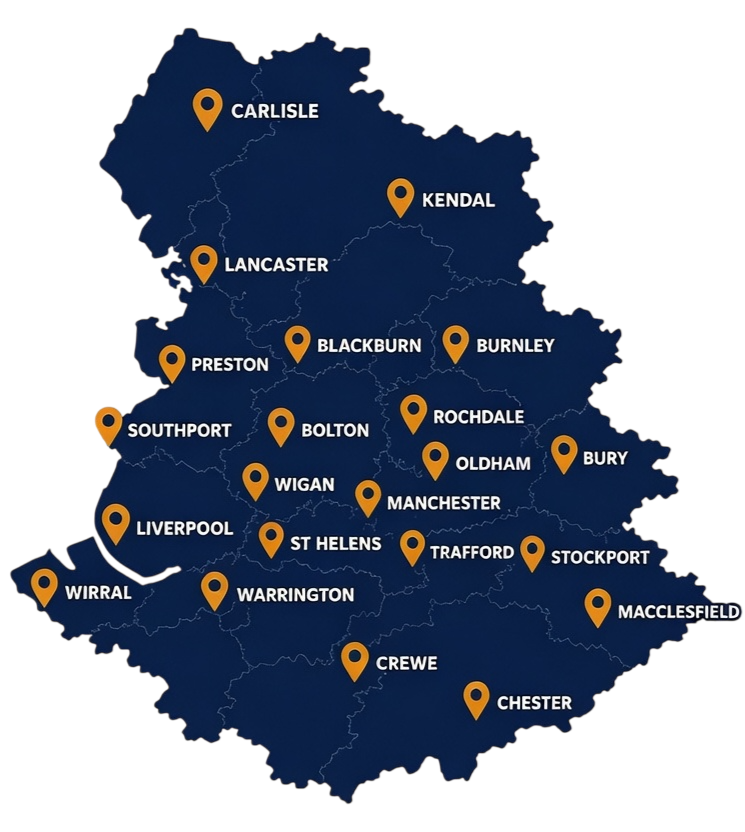
BWSL arranges clinical waste collections across the entire North West region:
Greater Manchester
Manchester, Salford, Trafford, Stockport, Oldham, Rochdale, Bolton, Bury, Wigan, Tameside, Ashton-under-Lyne, Leigh and all surrounding areas
Merseyside
Liverpool, Wirral, Knowsley, St Helens, Sefton and surrounding areas
Lancashire
Preston, Blackburn, Burnley, Lancaster, Chorley, Leyland, Accrington and surrounding towns
Cheshire
Warrington, Chester, Crewe, Macclesfield, Ellesmere Port and surrounding areas
Cumbria
Carlisle, Kendal, Barrow-in-Furness and surrounding areas
What's Included With Every BWSL Clinical Waste Collection
Free yellow bags and containers — yellow bags, sharps bins in all sizes, blue-lidded pharmaceutical containers and purple-lidded cytotoxic containers where required — all supplied at no cost
ADR-trained licensed carriers — every collection partner is Environment Agency registered and ADR certified
Full consignment notes — issued automatically on every single collection, in the exact format CQC inspectors expect
30 day rolling notice — cancel or amend collections with just 30 days notice, no exit fees, no penalties
One monthly invoice — clinical waste alongside any other streams, all on one simple bill
Same-day emergency collections — available across the North West when bins fill unexpectedly
Free waste audit — including a full compliance check against HTM 07-01 requirements
Multi-site management — multiple locations consolidated onto one invoice
The BWSL Plant a Tree Scheme — every tonne diverted from landfill earns your business a native British tree
Frequently Asked Questions — Clinical Waste Disposal North West
-
Clinical waste is infectious or potentially infectious — used dressings, sharps, contaminated PPE — and must go to incineration via a licensed carrier with consignment notes. Offensive waste is non-infectious hygiene waste — incontinence pads, nappies, sanitary products — that does not require incineration and can be disposed of much more cheaply in tiger stripe bags. Getting this distinction right is one of the fastest ways to reduce clinical waste costs.
-
A consignment note — not a standard waste transfer note — is required for every clinical waste collection. Consignment notes must be retained for a minimum of three years. BWSL issues fully compliant consignment notes automatically on every collection.
-
Yes — always. Yellow bags, sharps bins in all sizes, blue-lidded pharmaceutical containers and purple-lidded cytotoxic containers are all supplied free of charge. No rental fees, no deposit, no hidden charges.
-
No. BWSL operates on a 30 day rolling notice period. Cancel or amend collections with just 30 days notice — no exit fees, no penalties.
-
All BWSL collection partners are Environment Agency registered waste carriers with current ADR certification. We can provide carrier licence numbers on request.
-
It depends on your volume and waste type. Most GP surgeries and dental practices need weekly or fortnightly collections. High-volume care homes may need weekly or twice-weekly collections. Sharps bins should be changed at three-quarters full, not when completely full. BWSL advises on the right frequency during the free waste audit.
-
Yes — general waste, offensive waste, pharmaceutical waste and confidential shredding can all be managed alongside clinical waste and consolidated onto one monthly invoice.
-
Yellow bag waste and sharps go to incineration at Environment Agency-permitted facilities. Pharmaceutical waste goes to pharmaceutical incineration. Offensive waste goes to energy recovery or landfill. Nothing goes to unlicensed sites. Your consignment note confirms the disposal route on every collection.
-
Yes — Greater Manchester, Merseyside, Lancashire, Cheshire and Cumbria. We also have dedicated clinical waste pages for specific locations across the region.
-
BWSL works with a vetted network of licensed clinical waste carriers across the North West and uses collective buying power to negotiate rates individual businesses can't access alone. Most clients save 15–25% on their previous clinical waste costs from month one.
Get Your Free Clinical Waste Quote Today
Whether you're a GP surgery managing weekly sharps and yellow bag collections, a care home navigating the clinical and offensive waste boundary, or a tattoo studio wanting to ensure you're fully compliant — BWSL has the experience, the network and the buying power to manage your clinical waste better and cheaper than you're currently doing it.
30 day rolling notice. Free containers. Full HTM 07-01 and CQC compliance. One invoice.