
Sharps Waste Disposal North West
Sharps waste is one of the highest-risk categories of clinical waste a business can produce. A used needle, syringe, lancet or scalpel blade that is incorrectly stored, incorrectly packaged or incorrectly disposed of doesn't just create a compliance problem — it creates a genuine risk of needlestick injury, blood-borne infection and serious harm to anyone who comes into contact with it between your premises and the final disposal facility.
The legal framework around sharps waste reflects that risk. Every business producing sharps waste in the North West — GP surgeries, dental practices, care homes, pharmacies, tattoo studios, aesthetic clinics, veterinary practices and more — carries strict legal obligations that go beyond simply putting needles in a bin.
BWSL arranges licensed sharps waste disposal for businesses across the entire North West. Free yellow-lidded bins in all sizes, ADR-certified and EA-registered carriers on every collection, full consignment notes issued automatically and savings of 15–25% on what most businesses are currently paying.
30 day rolling notice. No long-term contracts. One simple monthly invoice.
Need an Instant Quote?
What Counts as Sharps Waste — The Complete Definition
Understanding exactly what constitutes sharps waste is the starting point for managing it correctly. Sharps waste is defined as any item that is sharp enough to puncture the skin and that has, or may have, been in contact with blood, bodily fluids or any infectious material.
This definition is broader than most businesses realise. Here's a comprehensive breakdown of what must be treated as sharps waste and disposed of in rigid yellow-lidded sharps containers:
-
Hypodermic needles — used in injections, blood draws, intravenous treatments and vaccination programmes
Syringes — with or without needles attached; a syringe that has contained medication is sharps waste
Lancets — used for blood glucose testing, blood sampling and similar procedures
Scalpel blades — used in surgical, minor procedure and dissection settings
Suture needles — used in wound closure
Cannulas and trocars — used in intravenous access and surgical drainage
Broken glass from laboratory settings where contamination with blood or bodily fluids has occurred or cannot be excluded
Glass ampoules and vials used for injectable medicines text goes here
-
Local anaesthetic cartridge needles
Orthodontic wires and brackets with sharp edges
Endodontic files and reamers
Burs and drill bits contaminated with blood
Extraction forceps and elevators contaminated with blood
-
All needles, syringes and lancets used in animal treatment
Surgical instruments contaminated with animal blood or tissue
Ear tags, tattoo needles and microchip implant devices used in animal identification
-
Tattoo needles — used in tattooing, even after a single use
Piercing needles — including ear, body and cartilage piercing needles
Cannulas used in aesthetic medicine including dermal filler and anti-wrinkle injections
Microblading and micropigmentation needles
Acupuncture needles — even single-use acupuncture needles are sharps wasten
What is NOT sharps waste — an important distinction
Clean, uncontaminated needles or sharps that have never been in contact with blood or bodily fluids are not classified as clinical sharps waste — they are pharmaceutical waste
Broken glass in a general office or kitchen setting where no contamination has occurred is general waste, not sharps waste
Rigid plastic packaging and hard objects that are not capable of causing a puncture wound are not sharps waste even if sharp to the touch
The Legal Framework Around Sharps Waste
Sharps waste sits at the intersection of several pieces of UK legislation and regulatory guidance. Understanding the framework is essential for every North West business that produces it.

The Health and Social Care Act 2008 (Regulated Activities) Regulations 2014
For registered healthcare providers — GP surgeries, dental practices, care homes, hospitals and similar settings — the Health and Social Care Act and its associated regulations place direct requirements on waste management as part of safe care delivery. The Care Quality Commission inspects and enforces against these requirements. Sharps waste management — correct containers, correct labelling, correct collection, complete consignment notes — is inspected as a standard part of a CQC visit.
HTM 07-01 — Safe Management of Healthcare Waste
HTM 07-01 is the Department of Health and Social Care's technical guidance on the safe management of healthcare waste. It is the primary reference document for sharps waste management in healthcare settings and sets out requirements for:
Container specification — what containers must be used for different types of sharps waste
Fill levels — when containers must be sealed and replaced
Storage — how sealed containers must be stored before collection
Labelling — what information must appear on containers
Documentation — what records must be kept for every collection
HTM 07-01 compliance is not a nice-to-have for healthcare providers — it is the standard against which CQC inspectors measure practice. BWSL ensures all sharps collections comply with HTM 07-01 requirements on every lift.
ADR Regulations — Dangerous Goods Transport
Sharps waste is classified as a dangerous good for transport purposes under ADR regulations. Every vehicle transporting sharps waste must be ADR-equipped. Every driver must hold a current ADR certificate. Every movement of sharps waste on a public road must be accompanied by appropriate dangerous goods transport documentation.
An unlicensed carrier without ADR certification transporting your sharps waste is committing a criminal offence — and using such a carrier knowingly creates direct legal liability for you as the producer. BWSL uses only EA-registered, ADR-certified collection partners across the North West.
The Hazardous Waste Regulations 2005
Sharps waste is classified as hazardous waste under UK legislation. This means consignment notes — not standard waste transfer notes — are required for every collection. Consignment notes must accurately describe the waste, identify the producer, carrier and receiving facility, and be signed by both producer and carrier at the point of collection. They must be retained for a minimum of three years.
Many small healthcare businesses across the North West are unaware of the distinction between waste transfer notes and consignment notes. A waste transfer note does not satisfy the documentation requirement for sharps waste. BWSL issues fully compliant consignment notes automatically on every sharps collection.
Sharps Bins — The Complete Specification Guide
The container you use for sharps waste is not a matter of preference — it is specified by legislation and HTM 07-01 guidance. Using the wrong container is a compliance breach. Here's everything you need to know about correct sharps bin specification:
Colour Coding — Critical for Compliance
The colour of a sharps container lid identifies the type of waste it contains and the disposal route it requires. Getting this wrong causes rejected loads, additional charges and compliance failures:
Yellow lid — standard sharps waste
The most common sharps bin for healthcare settings. Used for sharps contaminated with blood and bodily fluids where no medicinal residue is present — standard hypodermic needles, lancets, scalpel blades and similar items. Yellow-lidded bins go to incineration.
Yellow lid with blue stripe — medicinal sharps
Used for sharps that have been used to administer medicines — syringes that contained medication, insulin pen needles, prefilled syringe barrels. The medicinal residue requires a different approved disposal route. Many practices incorrectly use standard yellow-lidded bins for medicinal sharps — BWSL identifies and corrects this during the free waste audit.
Purple lid — cytotoxic sharps
Used for sharps that have been in contact with cytotoxic or cytostatic medicines — chemotherapy drugs and certain prescription medicines. Requires specialist disposal at an approved cytotoxic waste facility.
Orange lid — for specific waste streams
Used in specific settings as advised by infection control professionals. Not commonly encountered in most North West businesses.
Size Guide — Choosing the Right Bin
Sharps bins are available in a range of sizes from 1 litre to 30 litres and above. Choosing the right size for your output volume is important — an undersized bin fills too quickly and increases handling, while an oversized bin may sit in use for too long creating degradation and infection risks:
1L — 2.5L bins — suitable for very low-volume producers, individual practitioners, home visiting healthcare professionals and single-treatment room settings
5L bins — the most common size for general practice settings including GP consultation rooms, dental surgeries and treatment rooms. Suitable for a week to fortnight of standard appointment activity
7L — 10L bins — suitable for higher-volume treatment rooms, vaccination clinics and settings with multiple practitioners sharing a container
15L — 30L bins — suitable for high-volume clinical settings, emergency departments, surgical suites and settings collecting from multiple rooms into a central container
Over 30L — larger containers — available for very high-volume settings including hospitals, large care homes and specialist clinical facilities
BWSL supplies the correct size bins for your specific setting and output volume — and adjusts sizes if it becomes clear during the first month of service that the initial sizing isn't right.
The Fill Level Rule — One of the Most Important Rules in Sharps Management
Sharps bins must be sealed and replaced when they reach the marked fill line — typically around 75–80% of the container's capacity. Never continue filling beyond this line. Here's why this matters:
An overfilled sharps bin cannot be safely sealed — forcing the lid risks injury and is a compliance breach
Sharps at or above the fill line can fall out when the lid is applied
An overfilled sealed bin is unstable and increases the risk of injury during handling
HTM 07-01 specifically prohibits overfilling — it is one of the most commonly cited sharps waste compliance failures in CQC inspections
The 75–80% rule is simple and critical. BWSL trains every new client on this at the start of service and ensures collection frequency is matched to output volume so bins never reach the fill line between scheduled collections.
Sharps Bin Assembly and Closure
UN-approved sharps bins have two closure stages — a temporary closure that allows waste to be added between uses, and a final closure that permanently seals the bin ready for collection. The temporary closure must be applied after every use to prevent accidental spillage. The final closure must be applied before the bin leaves the point of use for storage or collection. BWSL provides instructions on correct assembly and closure with every bin supplied.
What Happens to Sharps Waste After Collection?
BWSL's ADR-certified, EA-registered collection partners arrive at your premises on your scheduled collection day. Sealed sharps bins are collected, handled by trained operatives and loaded into an ADR-compliant vehicle.
Collection
Consignment note signed
The carrier signs the consignment note at the point of collection, confirming the waste type, number of containers, weight and collection date. You retain a copy.
BWSL retains records of the complete disposal chain on your behalf and can produce the full documentation trail on request for CQC inspections, Environment Agency enquiries or internal audit purposes.
Documentation
Ash disposal
Incineration residue is disposed of at a permitted landfill facility. The sharps have been completely destroyed — there is no risk of recovery or injury.
Sharps waste undergoes high-temperature incineration at an Environment Agency-permitted treatment facility. Incineration is the only approved treatment for sharps waste — they cannot go to landfill, autoclave treatment or alternative energy recovery.
Transport
Sharps bins are transported to a licensed treatment facility in a vehicle meeting full ADR specification — appropriate markings, safety equipment and dangerous goods documentation.
Treatment
Common Sharps Waste Mistakes North West Businesses Make
In working with sharps waste producers across the North West, BWSL consistently encounters the same compliance failures. Knowing what they are is the most effective way to avoid them:
Putting sharps in yellow soft waste bags
This is the most dangerous and most common sharps compliance failure. Soft yellow clinical waste bags are designed for soft infectious material — dressings, gloves, contaminated materials. They are not designed for sharps. A needle pushed through the bottom of a yellow bag presents an immediate injury risk to every person who handles the bag from your premises to the disposal facility. Sharps must go in rigid yellow-lidded containers — always. No exceptions.
Using the wrong lid colour
Standard yellow lids for medicinal sharps, or failing to use purple-lidded containers for cytotoxic sharps, results in incorrect disposal routing. Yellow-lidded medicinal sharps are rejected at standard incineration facilities because the medicinal residue requires a specific treatment stream. Rejected loads result in additional charges, compliance failures and the need to re-arrange collection.
Overfilling bins
Continuing to fill sharps bins beyond the fill line is one of the most frequently cited failures in CQC sharps waste inspections. It is not a minor technicality — an overfilled, improperly sealed bin is a direct physical hazard. Change bins at the fill line, not when they're full to the brim.
Using the wrong size bin and changing too infrequently
A bin that takes three months to fill in a low-volume setting may seem efficient — but the longer a bin is in use, the greater the risk of degradation, the higher the chance of mishandling and the greater the infection risk from the accumulated waste. Most bins have a maximum use period specified by the manufacturer — typically six months. Bins in use beyond this period should be sealed and replaced regardless of fill level.
Missing or incorrect consignment notes
Using standard waste transfer notes for sharps waste instead of consignment notes is extremely common among smaller healthcare businesses. Waste transfer notes do not satisfy the legal requirement for clinical and hazardous waste. BWSL issues compliant consignment notes automatically — but businesses using other providers should check that what they're receiving genuinely meets the legal requirement.
Storing sharps bins in patient or public areas
Sealed sharps bins awaiting collection must be stored in a secure, locked area inaccessible to patients, children and members of the public. A sharps bin left in a corridor, waiting room or unlocked cupboard is both a safety risk and a compliance failure.
Using unlicensed carriers
Some businesses across the North West — often unknowingly — have used waste carriers who were not properly licensed or ADR-certified for sharps transport. The producer's duty of care means you are responsible for verifying your carrier's credentials. BWSL provides carrier licence information on request.
Sharps Waste Disposal for Every North West Sector
-
![A smiling male doctor of South Asian descent sitting at a desk in his office, wearing a white coat with a stethoscope around his neck, with medical equipment on the desk and a computer in front of him.]()
GP Surgeries and Primary Care Networks
GP practices across Greater Manchester, Merseyside, Lancashire and Cheshire are among the highest-volume sharps producers in the North West. Vaccination programmes — seasonal flu, COVID boosters, childhood immunisations — generate significant needle volumes in short periods. Routine consultations, blood draws, chronic disease management and minor procedure rooms all contribute to daily sharps output.
The challenge for GP practices is consistency across a large team — different clinicians, locum cover, practice nurses and healthcare assistants all handling sharps. BWSL provides the correct bins for every room where sharps are used, ensures collection frequency matches output volumes across the whole practice and supplies consignment notes that satisfy CQC inspection requirements automatically.
-
![Two medical professionals performing a surgical procedure on a patient lying down, with one holding surgical instruments and the other assisting, both wearing blue surgical gowns, gloves, and face masks.]()
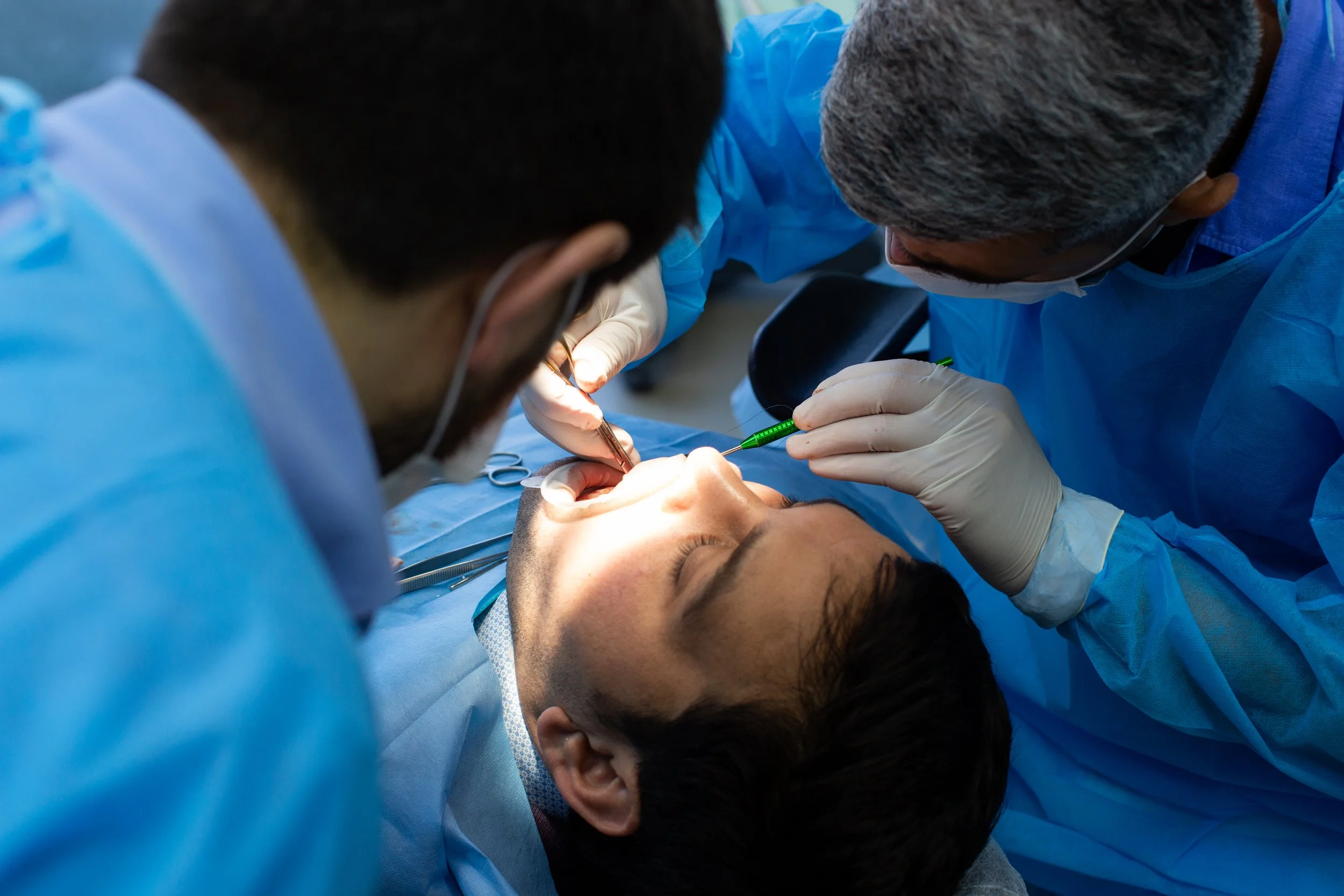
Dental Practices
Every dental practice across the North West generates sharps waste — local anaesthetic needles, burs, files, wires and contaminated instruments. The complexity for dental practices is the medicinal residue question — local anaesthetic cartridge needles technically contain medicinal residue and should go in yellow-lidded-with-blue-stripe containers, not standard yellow lids.
BWSL supplies the correct container for every dental sharps stream and helps practice managers ensure their waste segregation is correct for CQC compliance — a detail that many dentists haven't been advised about by previous providers.
-
![A nurse helping an elderly man in a wheelchair by holding his hand and speaking to him in a bedroom with a window, curtains, plants, and bedside table.]()
Care Homes
Care homes across the North West generate sharps from insulin administration, blood glucose testing, subcutaneous injections and wound care procedures. The challenge is managing sharps waste in a non-clinical residential environment — sharps bins must be secure, inaccessible to residents and properly stored between collections.
BWSL works with care home managers across Greater Manchester, Merseyside and Lancashire to design sharps waste management that works in a residential care context — appropriate bin sizes for each care floor, secure storage solutions and collection frequencies that prevent bins from being left in service too long.
-
![A customer wearing a colorful scarf and face mask stands at a pharmacy counter, talking to a pharmacist behind a glass window, with shelves of medicines in the background.]()
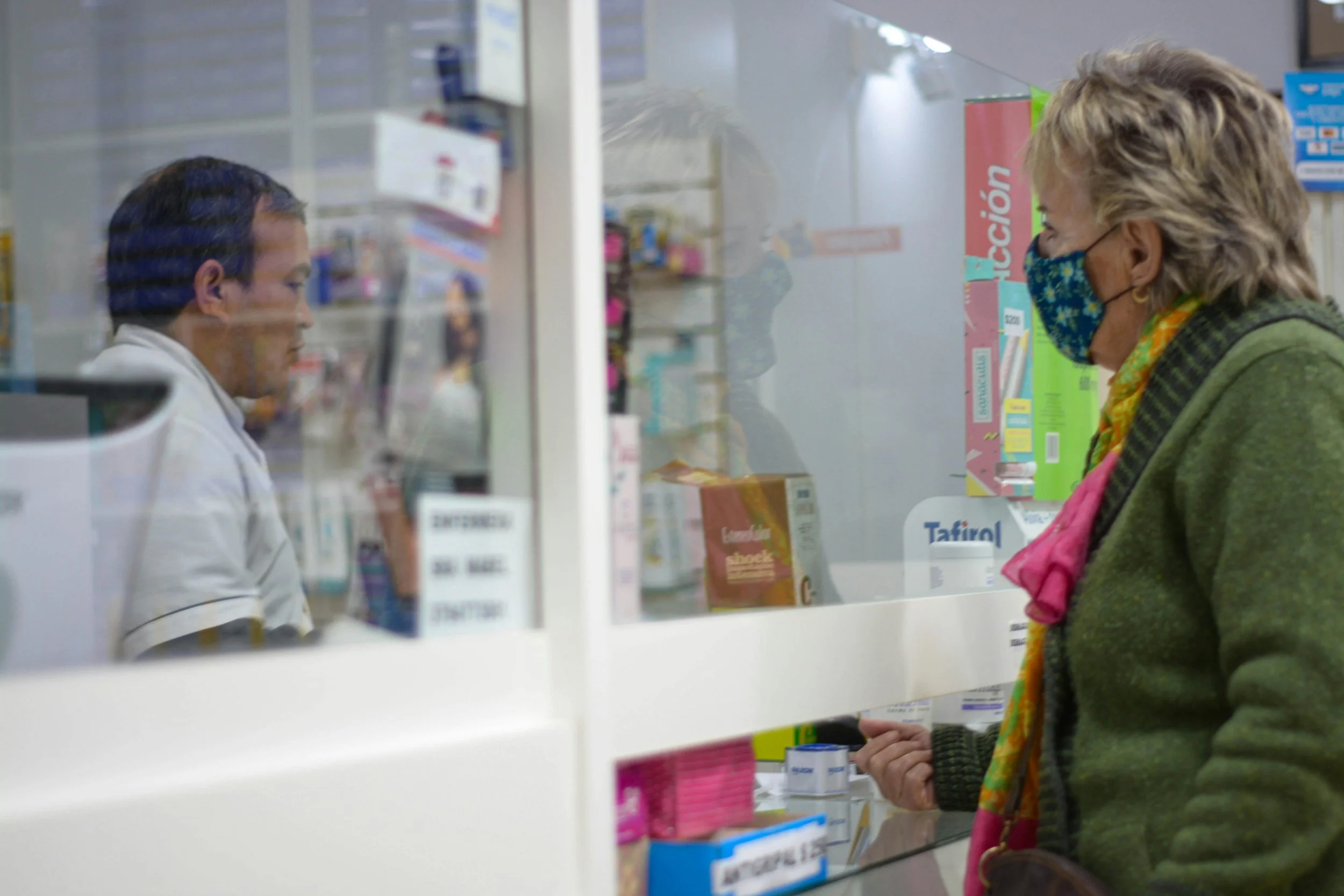
Pharmacies and Dispensaries
Community pharmacies receive sharps waste from patients returning used insulin pens, lancets and injection devices. The volume is unpredictable — dependent on the pharmacy's catchment area and the prevalence of diabetes and injectable medication management among patients.
BWSL provides pharmacies across the North West with sharps bins sized for patient returns, ensures collection frequency adapts to seasonal demand variations and coordinates sharps disposal alongside pharmaceutical waste collections on one invoice.
-
![A tattooed man with dark hair and a beard working on a tattoo machine in a tattoo studio, with framed artwork on the wall behind him and a ring light overhead]()
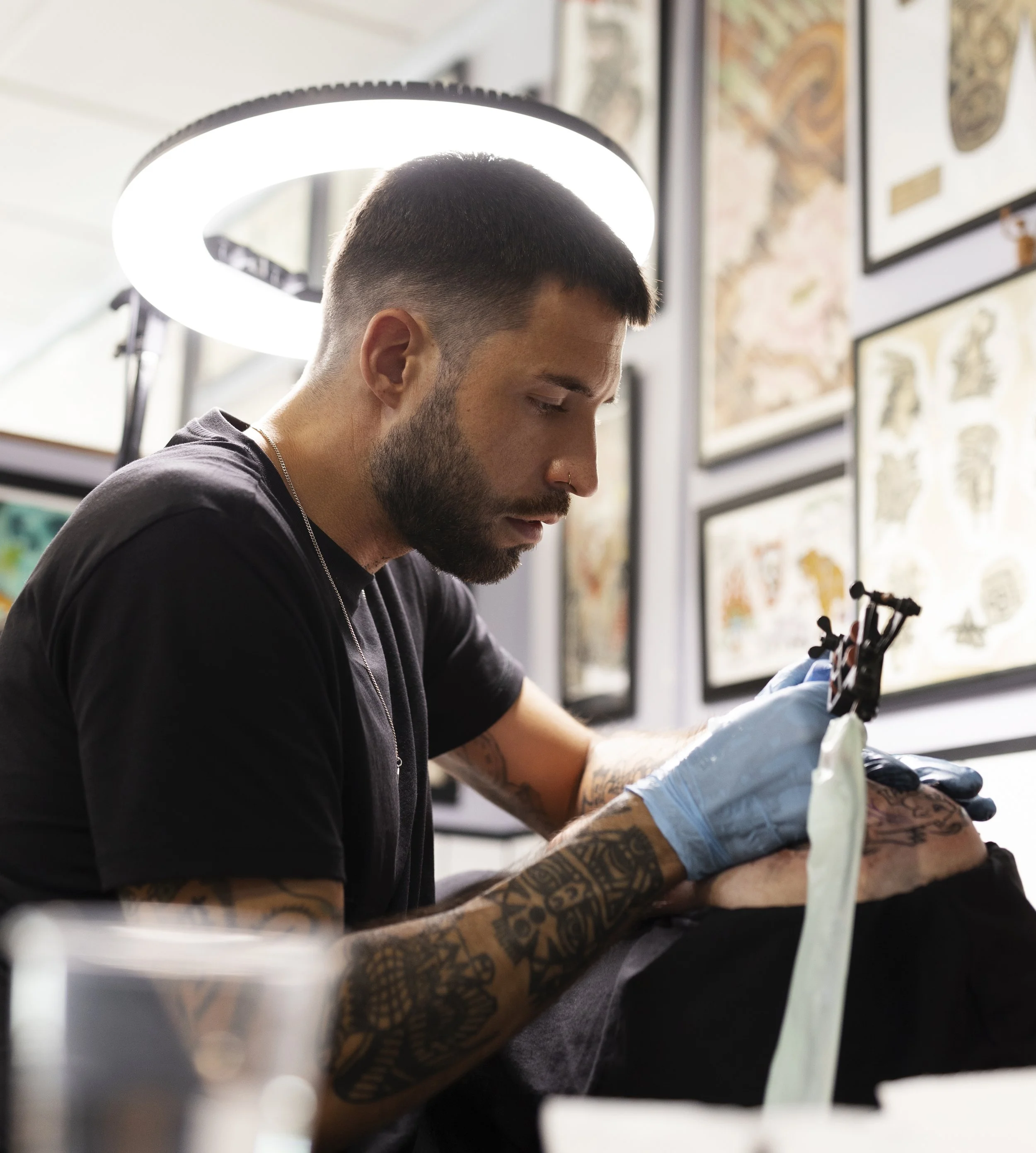
Tattoo and Body Modification Studios
Manchester's Northern Quarter, Liverpool's Baltic Triangle and tattoo studios across the North West generate sharps waste from every session — single-use tattoo needles, piercing needles and any item that has broken skin during a procedure must be treated as sharps waste. Many studio owners are less clear on the compliance requirements than their healthcare counterparts.
BWSL works with tattoo and body modification studios across the North West — supplying appropriately-sized sharps bins, ensuring collection is frequent enough for busy studios and providing the consignment note documentation that demonstrates compliance to local authority inspectors.
-
![A smiling female healthcare worker wearing green scrubs and purple gloves holding medical equipment near a patient lying in a hospital bed.]()
Aesthetic Medicine and Beauty Clinics
The growth of aesthetic medicine across the North West — dermal fillers, anti-wrinkle injections, mesotherapy, microblading and similar treatments — has created a significant and growing sharps waste stream in a sector that isn't always aware of the full extent of its clinical waste obligations.
BWSL provides aesthetic and beauty clinics across Manchester, Liverpool, Cheshire and Lancashire with compliant sharps bins and reliable collections — ensuring this growing sector meets the same standards as established healthcare providers.
-
![A female veterinarian with blond hair, wearing teal scrubs and gloves, examining a dog in a veterinary clinic with anatomical charts of animals on the wall.]()
Veterinary Practices
Veterinary sharps waste carries exactly the same legal obligations as human healthcare sharps waste. Vets across the North West generate needles, syringes and contaminated instruments from every animal treated, and the volume in a busy practice can be significant.
BWSL manages sharps waste alongside general and clinical waste for veterinary practices across the North West — consolidating all streams onto one invoice and ensuring full consignment note documentation for every sharps collection.




Sharps Waste Disposal Across the North West — Our Coverage
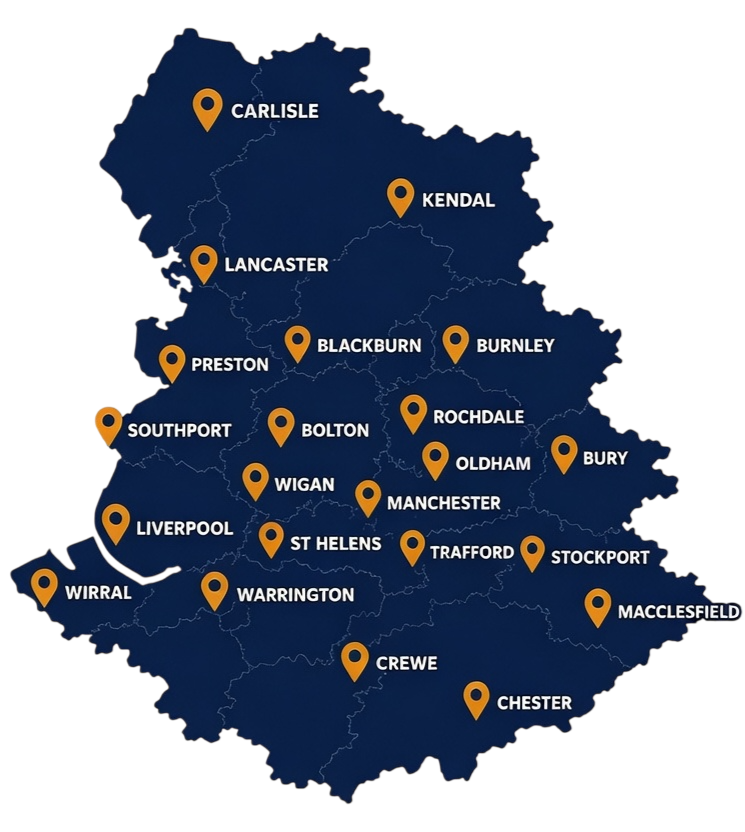
BWSL arranges sharps waste collections across the entire North West region:
Greater Manchester — Manchester, Salford, Trafford, Stockport, Oldham, Rochdale, Bolton, Bury, Wigan, Tameside and all surrounding areas
Merseyside — Liverpool, Wirral, Knowsley, St Helens, Sefton and surrounding areas
Lancashire — Preston, Blackburn, Burnley, Lancaster, Chorley, Leyland and surrounding towns
Cheshire — Warrington, Chester, Crewe, Macclesfield, Ellesmere Port and surrounding areas
Cumbria — Carlisle, Kendal, Barrow-in-Furness and surrounding areas
What's Included With Every BWSL Sharps Collection
Free yellow-lidded bins in all sizes — 1L through 30L and above, correct lid colour for your waste stream, supplied and replaced at no cost
EA-registered and ADR-certified carriers — every collection partner holds current EA registration and ADR certification
Fully compliant consignment notes — issued automatically on every collection, signed by carrier and producer, retained on your behalf for three years
Same-day emergency collections — available across the North West when bins fill unexpectedly
30 day rolling notice — cancel or amend collections with just 30 days notice, no exit fees, no penalties
One monthly invoice — sharps disposal alongside any other waste streams, all consolidated
Free waste audit — including bin specification check and fill level assessment
Multi-site management — multiple locations across the North West on one invoice
The BWSL Plant a Tree Scheme — every tonne diverted from landfill earns your business a native British tree
The BWSL Plant a Tree Scheme
For the sharps waste we divert from landfill on your behalf earns your business a native British tree planted right here in the UK — fully funded by BWSL at no extra cost to you. Responsible sharps disposal should contribute to a better environment as well as a safer workplace.

Frequently Asked Questions — Sharps Waste Disposal North West
-
Sharps waste is classified as hazardous waste and requires a consignment note — not a standard waste transfer note. Consignment notes are more detailed documents that create a complete chain of custody from producer to disposal facility. They must be signed by both the producer and the carrier at the point of collection and retained for three years. Many businesses don't realise they are receiving the wrong document. BWSL issues fully compliant consignment notes automatically on every sharps collection.
-
Standard sharps waste — needles, lancets and sharps with no medicinal residue — requires a yellow lid. Sharps that have been used to administer medicines require a yellow lid with a blue stripe. Cytotoxic sharps require a purple lid. Using the wrong lid results in rejected loads and compliance failures. BWSL advises on the correct lid colour for every waste stream during the free waste audit.
-
At the marked fill line — typically 75–80% full. Never continue filling beyond this point. Overfilling is one of the most commonly cited sharps waste compliance failures in CQC inspections and creates a genuine injury risk.
-
Yes — yellow-lidded bins in all sizes are supplied completely free of charge. No rental fees, no deposit, no hidden charges. Bins are delivered within 48 hours of accepting your quote.
-
No. BWSL operates on a 30 day rolling notice period. Cancel or amend sharps collections with just 30 days notice — no exit fees, no penalties.
-
Never. Sharps must go in rigid yellow-lidded containers — not soft bags. Putting sharps in yellow bags is one of the most dangerous clinical waste mistakes possible, creating injury risk for everyone who handles the bag.
-
Frequency depends on your output volume. Bins should be collected before they reach the fill line — so the right frequency depends on how quickly your bins fill. Most GP surgeries need weekly or fortnightly collections. High-volume settings may need weekly or more frequent collections. BWSL advises on the right frequency during the free waste audit and adjusts if volumes change.
-
Call us immediately. Same-day emergency collections are available across the North West for exactly this situation. An overfull sharps bin is a safety and compliance issue — do not attempt to compress the contents or force the lid. Seal the bin using the temporary closure and arrange emergency collection.
-
Yes — BWSL manages multi-site sharps waste collections regularly and consolidates all sites onto one monthly invoice.
-
Yes — the legal classification and disposal requirements are identical. Tattoo needles, piercing needles and aesthetic medicine sharps are all clinical sharps waste requiring licensed collection, consignment notes and incineration at a permitted facility.
-
BWSL's network buying power typically results in 15–25% lower pricing than businesses achieve going direct. Additionally, BWSL manages the full compliance process — bin sizing, correct lid specification, consignment note completion and facility routing — reducing the administrative burden on your team significantly.
Get Your Free Sharps Waste Disposal Quote Today
Whether you're a GP surgery managing high-volume weekly collections, a tattoo studio wanting to ensure full compliance, a dental practice unsure about the right bin specification or a care home looking to consolidate sharps alongside clinical and general waste — BWSL has the expertise, the network and the compliance knowledge to manage your sharps waste correctly, safely and at a lower cost than you're currently paying.
Free bins in the right sizes. Correct lid colour. Consignment notes on every collection. ADR-certified carriers. 30 day rolling notice. One invoice.