
Offensive Waste Collection North West
Offensive waste is one of the most misunderstood and most expensive waste management mistakes made by businesses across the North West. Not because it's complicated — but because most businesses have never been told what it actually is or how much less it costs to dispose of than clinical waste.
If your care home, nursery, school or leisure facility is putting incontinence pads, nappies or non-infectious hygiene products into yellow clinical waste bags, you are paying incineration prices for waste that qualifies for a significantly cheaper disposal route — and you have almost certainly been doing so for years without anyone pointing it out.
BWSL arranges offensive waste collections for businesses across the entire North West. Free tiger stripe bags supplied, fully compliant collections, 30 day rolling notice and in most cases an immediate reduction in waste costs from the first collection.
Need an Instant Quote?
What Is Offensive Waste — And Why Does the Distinction Matter?
Offensive waste is non-infectious, non-hazardous hygiene waste that has no clinical or pharmaceutical contamination but which is unpleasant in nature. It is defined in UK waste legislation and guidance — including HTM 07-01 — as a separate and distinct waste stream from clinical waste.
The critical distinction is infection risk. Clinical waste poses a genuine infection risk to anyone who comes into contact with it — which is why it requires incineration at a licensed facility. Offensive waste carries no infection risk — which is why it can be disposed of through less expensive alternative treatment or landfill routes without compromising public health or environmental safety.
The financial consequence of this distinction is significant. Clinical waste disposal via incineration typically costs two to four times more per collection than offensive waste disposal. A business incorrectly treating all hygiene waste as clinical waste and paying incineration rates for material that qualifies as offensive waste is overpaying substantially — often by hundreds of pounds per year.
What Counts as Offensive Waste
The following materials are classified as offensive waste providing they carry no clinical contamination or infection risk:
Non-infectious PPE and clinical materials:
Gloves, aprons, masks and other disposable PPE used in non-infectious care situations — where no contact with blood, bodily fluids or infectious materials has occurred
Used wound dressings, bandages and plasters from non-infectious wounds — cuts, abrasions and chronic wounds in patients with no known infectious condition
Disposable clothing, gowns and coverings used in non-clinical care environments
Other offensive waste materials:
Human and animal faecal matter and soiled materials where no infection risk is identified
Catheter and stoma bags — where the patient has no known infectious condition
Urine collection bags and urinary drainage materials in non-infectious settings
Personal hygiene products:
Incontinence pads and pull-up pants — from care homes, nursing homes and residential facilities
Nappies and disposable trainer pants — from nurseries, schools, childcare settings and leisure facilities
Sanitary products — towels, tampons and similar hygiene items from staff and public-use facilities
Disposable bed protection, bed pads and incontinence sheets where the resident or patient has no known infectious condition
Adult briefs and continence products from community care settings
Understanding what doesn't qualify as offensive waste is equally important:
Any material contaminated with blood — this is infectious clinical waste regardless of the patient's health status
Any material from a patient with a known or suspected infectious condition — this is infectious clinical waste requiring yellow bag disposal
Sharps — always clinical waste regardless of contamination status
Pharmaceutical waste — always requires separate disposal through appropriate pharmaceutical routes
Materials from patients in isolation or infection control settings — always clinical waste
When in doubt, the safer classification is clinical waste. BWSL advises on the correct classification for every waste stream during the free waste audit.
What Is NOT Offensive Waste
The Financial Case for Getting Offensive Waste Right!
The cost difference between clinical and offensive waste disposal is one of the most significant savings opportunities BWSL finds during free waste audits across the North West. Here's how the numbers typically stack up:
A medium-sized care home in Greater Manchester producing 50 incontinence pads and similar hygiene products per day is generating a significant volume of hygiene waste. If that waste is going into yellow clinical bags it is travelling to incineration at clinical waste disposal rates — typically £80–£120 per collection or more depending on volume and frequency.
If the same waste is correctly classified as offensive waste and collected in tiger stripe bags, the same volume goes to alternative treatment or landfill at a fraction of the cost — typically £30–£60 per collection. The annual saving from this single correction alone can be £500–£2,000 for a medium-sized care home.
Multiply this across a group of care homes, a chain of nurseries or a leisure centre with multiple changing facilities, and the savings become very significant very quickly — purely from correctly classifying waste that was already being produced.
BWSL identifies this opportunity in almost every care home and nursery audit across the North West. It is consistently one of the fastest and most impactful changes we make for new clients.
Tiger Stripe Bags — What They Are and How to Use Them
Specification — tiger stripe bags must be UN-approved and meet the specification set out in HTM 07-01. BWSL supplies correctly specified tiger stripe bags to every client at no cost.
Storage — sealed tiger stripe bags awaiting collection must be stored in a designated, secure area away from public access. In care homes and nurseries, storage areas should be locked and inaccessible to residents and children.
Offensive waste is collected in tiger stripe bags — yellow and black striped bags that identify the contents as offensive waste requiring separate treatment from clinical waste. Here's what you need to know about using them correctly:
Labelling — bags should be clearly identified with your premises name, the waste type and the date of bagging. Clear labelling speeds collection and ensures correct routing at the treatment facility.
What must never go in tiger stripe bags — sharps, clinical waste, pharmaceutical waste, blood-contaminated materials or any waste from infectious patients. Tiger stripe bags are for non-infectious hygiene waste only.
Filling and closure — bags should be tied securely when three-quarters full. Never overfill — an overfull bag risks splitting during handling, creating an unpleasant and potentially unsafe situation for collection operatives.
Offensive Waste Collections for North West Sectors
-
![A nurse or caregiver in white scrubs and a stethoscope assists an elderly man in a wheelchair in a bedroom, holding his arm gently. The room has beige curtains, a small bedside table with medication bottles, a lamp, and a glass of water, with a potted plant near a large window.]()
Care Homes and Residential Facilities
Care homes across Greater Manchester, Merseyside, Lancashire and Cheshire are the largest producers of offensive waste in the North West. Daily incontinence care, continence product changes and personal hygiene support generate significant volumes of offensive waste — and the care home sector has the most to gain financially from correct waste classification.
BWSL works with care home managers to audit every waste stream — identifying the boundary between what genuinely requires yellow bag clinical disposal and what correctly qualifies for tiger stripe offensive waste collection. Most care homes we work with find an immediate, significant cost reduction from this audit alone, alongside improved compliance and simplified waste management for care staff.
-
![Two young girls playing with colorful toys on a carpeted floor in a room with a teddy bear in the background.]()
Nurseries and Childcare Settings
Nurseries handling nappy changes generate offensive waste with every nappy change — nappies, wipes used in non-infectious nappy changes and disposable changing mats are all offensive waste. Many nurseries across the North West are incorrectly treating this as clinical waste, paying incineration prices for material that should be in tiger stripe bags.
BWSL provides nurseries across Greater Manchester, Merseyside and Lancashire with tiger stripe bag collections sized and scheduled to their daily nappy change volumes — with waste transfer documentation that satisfies Ofsted inspection requirements.
-
![A classroom with young students raising their hands while a teacher stands at the blackboard, which has math problems written on it. The classroom is decorated with colorful flags hanging from the ceiling, and maps of Europe and animals on the walls.]()
Schools and Educational Settings
Schools with pupils in nappies or continence products — including special educational needs schools and mainstream schools with younger pupils — generate offensive waste as part of their daily care obligations. BWSL arranges collections for educational settings across the North West timed around school hours and term dates.
-
![Two women exercising together on a rowing machine in a gym with large windows overlooking a cityscape.]()
Leisure Facilities and Sports Centres
Leisure centres, swimming pools, gyms and sports facilities generate offensive waste from changing room sanitary disposal units and first aid facilities. Collections can be scheduled around facility opening hours to minimise disruption.
-
![A smiling male doctor sitting at his desk in an office, wearing a white lab coat and a stethoscope around his neck.]()
Healthcare Settings — The Offensive Waste Boundary
Healthcare settings including GP surgeries, dental practices and care homes produce a mixture of clinical and offensive waste — and the boundary between them is one of the most important and most frequently misunderstood distinctions in waste management.
BWSL helps healthcare businesses across the North West define the boundary correctly for their specific setting — ensuring clinical waste goes in yellow bags and genuinely offensive waste goes in tiger stripe bags. Getting this right reduces waste costs without compromising compliance or patient safety.





The Legal Position on Offensive Waste
Offensive waste is defined and regulated under the Environmental Protection Act 1990 and the Controlled Waste Regulations 2012. Every business producing offensive waste has a duty of care — meaning it must be correctly classified, stored, collected by a licensed carrier and disposed of at a permitted facility.
Waste transfer notes — the standard documentation for non-hazardous waste — are required for every offensive waste collection. Offensive waste does not require consignment notes, which is one of the practical differences that makes it administratively simpler to manage than clinical waste.
BWSL issues fully compliant waste transfer notes automatically on every offensive waste collection.
Coverage Across the North West
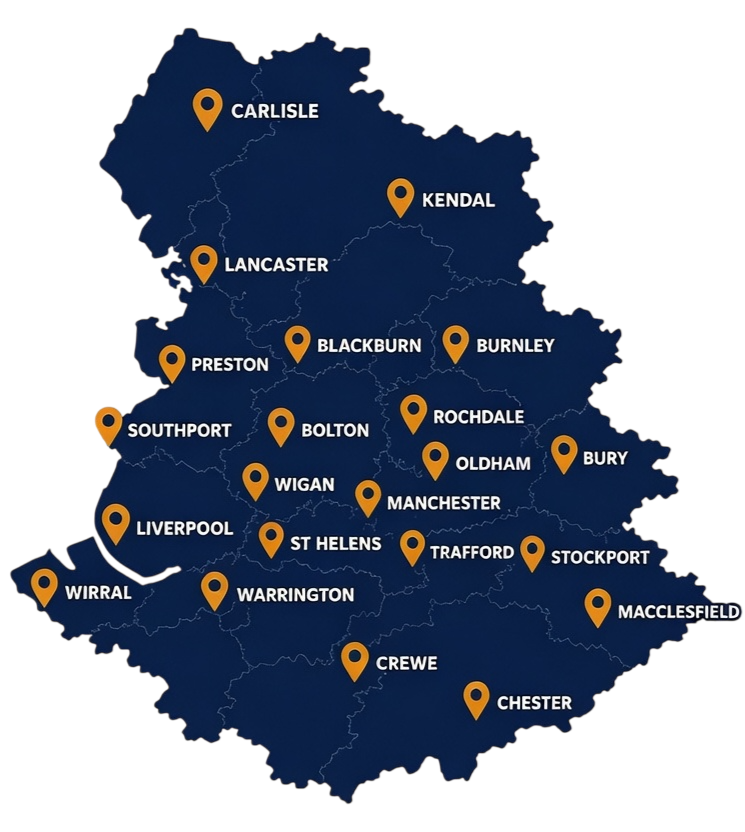
BWSL arranges offensive waste collections across the entire North West:
Greater Manchester — Manchester, Salford, Trafford, Stockport, Oldham, Rochdale, Bolton, Bury, Wigan, Tameside and surrounding areas
Merseyside — Liverpool, Wirral, Knowsley, St Helens, Sefton and surrounding areas
Lancashire — Preston, Blackburn, Burnley, Lancaster, Chorley, Leyland and surrounding towns
Cheshire — Warrington, Chester, Crewe, Macclesfield and surrounding areas
Cumbria — Carlisle, Kendal, Barrow-in-Furness and surrounding areas
What's Included With Every BWSL Offensive Waste Collection
Free tiger stripe bags — correctly specified UN-approved bags supplied at no cost
Waste transfer notes — issued automatically on every collection
30 day rolling notice — cancel or amend with just 30 days notice, no exit fees
One monthly invoice — offensive waste alongside any other streams consolidated
Same-day emergency collections — available across the North West
Free waste audit — including clinical vs offensive waste boundary assessment
The BWSL Plant a Tree Scheme — every tonne diverted from landfill earns a native British tree

Frequently Asked Questions — Offensive Waste Collection North West
-
Clinical waste is infectious or potentially infectious — it requires incineration at a licensed facility and consignment note documentation. Offensive waste is non-infectious hygiene waste — incontinence pads, nappies and similar materials from patients or residents with no known infectious condition. Offensive waste can be disposed of through alternative treatment or landfill at significantly lower cost than clinical waste incineration.
-
Typically two to four times cheaper per collection, depending on volume and frequency. Most care homes and nurseries switching from yellow bags to tiger stripe bags for their hygiene waste save between £500 and £2,000 per year from this single change alone.
-
Yes — correctly specified UN-approved tiger stripe bags are supplied free of charge. No rental fees, no deposit.
-
No. Offensive and clinical waste must be kept strictly separate. Mixing them contaminates the offensive waste stream — the entire bag must then be treated as clinical waste and incinerated, eliminating the cost saving.
-
No. Offensive waste requires a waste transfer note — the standard documentation for non-hazardous waste. Consignment notes are required for clinical and hazardous waste. This is one of the practical advantages of correctly classifying offensive waste separately.
-
No. BWSL operates on a 30 day rolling notice period. Cancel or amend with just 30 days notice — no exit fees, no penalties.
-
Tiger stripe bags delivered within 48 hours of accepting your quote. First collection typically within 5–7 working days.
-
Yes — the free waste audit specifically reviews the boundary between clinical and offensive waste for every new client. This is consistently one of the most valuable parts of the audit for care homes and nurseries.
Get Your Free Offensive Waste Collection Quote Today
If your business produces incontinence pads, nappies, sanitary products or non-infectious hygiene waste — there is a very good chance you are paying more than you need to. A free BWSL waste audit will confirm whether your waste is correctly classified and identify exactly how much you could save by switching to tiger stripe offensive waste collections.
Free tiger stripe bags. Waste transfer notes on every collection. 30 day rolling notice. One invoice.